
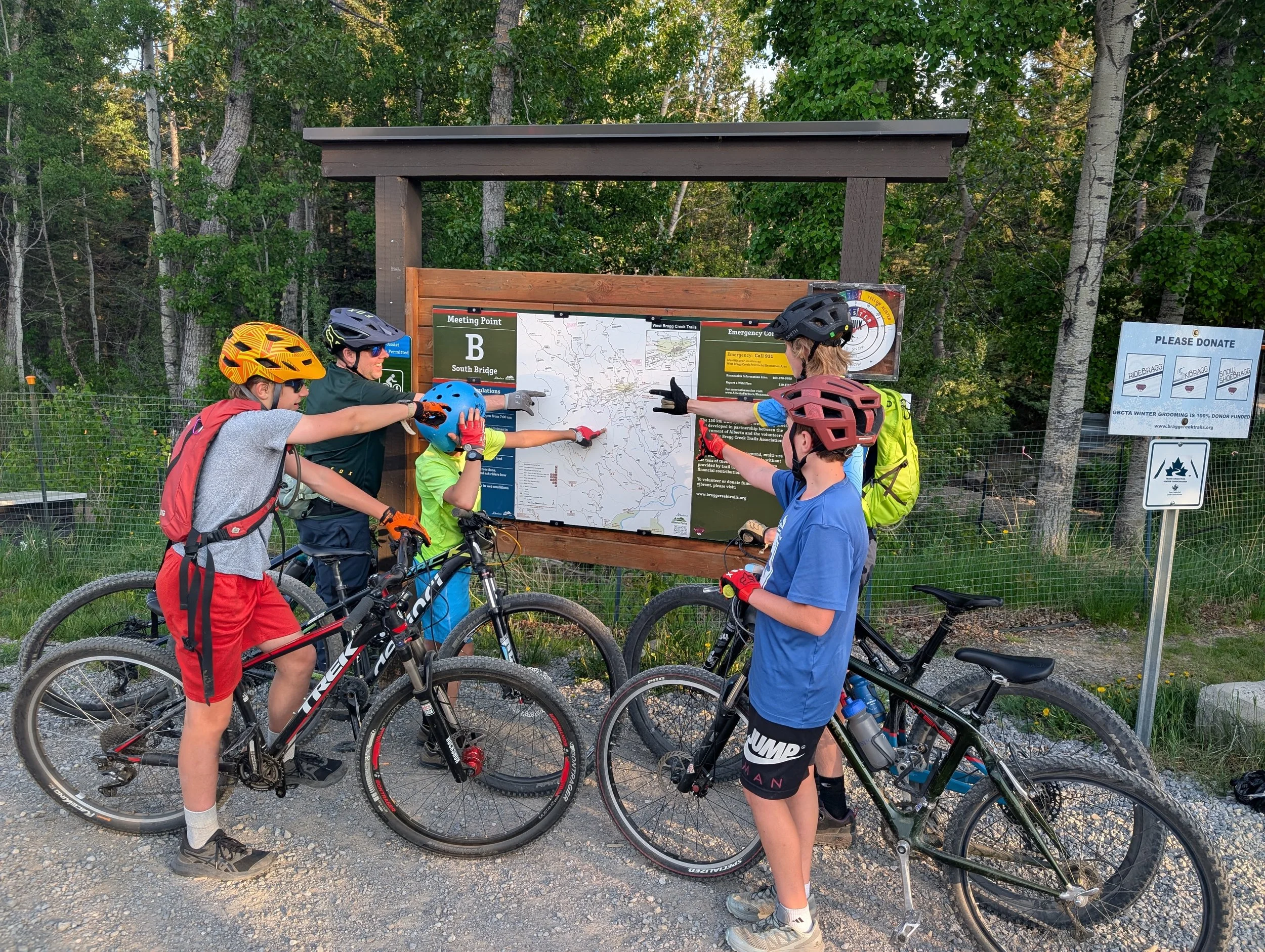
Recreational (REC)Bike Program
This program aims to create a positive experience where kids can become skilled cross-country riders and eventually handle any of our local terrain. The age range for Rec Biking is 6 to 17 years old.
XCBC’s Bike programs fill quickly, priority is given to past program participants, members and volunteer coach’s children. To stay informed about future registrations become a member below.
Program Details
-
Overview
We are offering the mountain bike program 1 night/week, either Tuesday, Wednesday, or Thursday nights. Please only register your child for one night per week.
Program group sizes will be approximately 6-8 kids per group.
-
Programs for children 6-10 years old:
For this age group our program will focus on developing the essential mountain bike skills.
Kids will receive a great deal of instruction on how to ride mountain bikes during the program regardless of age.
Pre-requisite – children should come into the program with basic riding skills and feeling comfortable riding up and down trails with rough and uneven terrain and be able to ride for at least 15 minutes without stopping.
-
Programs for children 11 -17 years old:
For this age group our program will involve more advanced skills but will also involve much more continuous riding.
Riders in this group will also be exposed to different styles of riding and racing.
Pre-requisite -Participants in this group should be able to ride over rough terrain and be able to ride for at least 30 minutes without stopping
What you need to know to get muddy!
REC Bike runs seasonally in the Fall and Spring. The program operates 3 nights a week for 6 weeks depending on weather conditions. Due to the popularity of this program, children are only allowed to register for 1 night of REC biking.
-
Because this program is so popular and we are limited by both coach resources and Alberta Parks permits, we have a tiered registration process. This allows previous registrants to continue in the program and to develop growth in this sport.
Registration Tiers
Tier 1 – Children of volunteer coaches
Tier 2 – Previous program participants
Tier 3 – XCBC Club Members
Tier 4 – Public
-
A functioning and well-maintained mountain bike with hand brakes
properly fitting helmet is mandatory
bike gloves
eye protection
water and snacks
Do a pre-ride safety check
Check your tire pressure.
Check wheel quick-releases.
Check your brakes.
Check your wheels.
Check your crank arms and pedals.
Check stem and headset.
Check your chain.
-
First Aid
Each coach will carry a first aid kit with basic supplies and bear spray
Each coach will create an emergency response plan to react to first aid situations.
Lead & Sweep Riders
The lead rider should be a parent volunteer coach or volunteer junior coach.
Must stop at all trail junctions to regroup.
Don’t proceed until the tail gunner rider has gotten to the junction.
This is very important to ensure that no riders get lost.
When leading a group call out i.e. “Day O”around corners and blind spots to ensure that other trail users and animals are aware of your approach.
Know who is in your group and how many kids – do regular head counts.
Kids must not take short cuts and must stay with the group. No Exceptions.
Always have an adult riding sweep
Pre and Post Ride
Don’t ride on roads without a coach.
Stay well away from parked and moving cars.
Ride the stunts in a clockwise direction only.
Stay within site of the meeting place.
Injury & Illness
If you hurt yourself or don’t feel well tell your coach or an adult.
Drink water when you get a chance.
Trail Etiquette
Be aware of other cyclists and stay out of each other’s way
Don’t block trails – don’t stop in blind spots, at bottom of hills, at the peak of a climb
Never leave bikes laying on the trail
Best place to stop is just past the top of a climb allowing enough room for other riders to group behind you
Always yield to horses and pedestrians- slow right down or pull over and stop
Be polite and respectful to other trail users
Leave plenty of space between you and the rider in front of you – at least 4 or 5 seconds gap
Only pass when there is room and it is safe to do so.
When approaching hikers and bikers from behind notify the riders – “passing on the left” (or right)
When meeting riders ‘head on’ both riders should slow down and move to the right to allow space to pass. If not enough space then be prepared to stop and pull off of the trail and yield to the other rider
Yield to riders going uphill. It is easy to remount your bike when descending as opposed to when you are climbing
Leave No Trace
Stay on trails- don’t cut corners
Don’t skid
Don’t ride when it’s too muddy
Don’t litter
Don’t frighten or endanger wildlife
Watch for Wildlife
Be Good to Your Bike
Keep your bike clean
lubricate chain every few rides
Never lay your bike down on the drive train side
Leave other rider’s bikes alone
Enjoy the Ride
This is not a race.
There are all levels of riders – Don’t be discouraged if you can’t keep up with everybody
Challenge yourself – be confident and try things even if they are hard and scary
You will be amazed at what you are capable of
Team work – Be supportive and encouraging of other riders “good job” “you can do it”
Ask questions
Have fun and try hard
-
Assess the Situation: determine the nature of the emergency and what type of response is required (first aid, search for a lost person, etc.).
Develop a Response Plan: based on the nature of the emergency, develop an appropriate response plan (first aid treatment, initiate search, etc.)
Assume leadership of the group and delegate responsibility: group members should assist in patient care if needed, If needed designate one or two adults to go for help.
The group with the victim(s) should:
Make the victim(s) as comfortable as possible, maintain his/her body temperature and protect the victim from the elements.
A trained first aider should be with the victim at all times.
Children should never be left unattended
Give the other group members something to do to get their minds off the situation
If Emergency Medical Services is required designate one adult to call 911.
Provide the following details to emergency responders:
Details of emergency
Your location
Assistance required
Designate one person to go to trail head to meet EMS.
If necessary use the Emergency Contact List to call the contact person of the injured person.